INTRODUCTION
- Why a Study on Glory Matters
The word glory is familiar to almost everyone. It appears in songs, political speeches, sports competitions, and religious literature. Yet behind this simple word lies a reality that is multiple, rich, and complex. This polymorphic nature is precisely what calls for in-depth study.
Glory is at once an attribute of God, an ideal for humanity, a trap for pride, and a symbol of greatness—whether personal or collective.
In the Bible, one of the most striking episodes is when Moses speaks to God saying: “Show me your glory!” (Exodus 33:18). This request expresses the deepest desire of the human heart: to understand what glory is, to experience its reality, and to participate in its light. God responds by manifesting His goodness and holiness, showing that His glory is not limited to a visual radiance, but encompasses everything He is—His nature, His attributes, His essence.
1.1. Linguistic Analysis of the Word Glory
In Hebrew, the most common term is kabôd (כָּבוֹד), whose primary meaning is weight or heaviness. Over time, it came to signify value, importance, and significance. The glory of God, then, is the weight of His being, the density of His reality. In human relationships, kabôd refers to honor or respect given to someone.
In Greek, the word is doxa (δόξα). Originally, doxa meant opinion or reputation. With time, especially in the Septuagint (Greek translation of the Old Testament), it came to mean splendor, brilliance, magnificence. In the New Testament, doxa often translates kabôd, referring both to divine glory and human renown.
This double linguistic root already reveals the ambiguity of the word: it may point to God or to humans, to truth or illusion, to the spiritual or the earthly.
1.2. Biblical and Spiritual Significance
Glory is omnipresent in Scripture. It is tied to creation (“The heavens declare the glory of God,” Psalm 19:1), to Israel’s history (the cloud of glory that guided the people), to Jesus’ ministry (His transfiguration, John 17:5), and to humanity’s final destiny (Revelation describes the New Jerusalem illuminated by God’s glory).
Thus, studying glory means:
- better knowing God in His nature and works;
- understanding humanity’s calling to reflect His glory;
- discerning deceptive glories that seduce and destroy.
1.3. Historical and Universal Significance
Beyond the Bible, all civilizations have sought glory. Egyptian pharaohs built pyramids to immortalize their greatness. The Greeks celebrated heroes through Homer’s epics. The Romans erected triumphal arches to preserve their victories. In imperial China, dynasties linked glory to the Mandate of Heaven, the source of their legitimacy.
Today, skyscrapers, athletic records, works of art, and technological achievements are not merely functional—they also express a pursuit of glory, recognition, and symbolic immortality.
1.4. Psychological and Social Significance
Glory is also a psychological category. Modern psychologists show that humans have a fundamental need for recognition. Philosopher Hegel described the struggle for recognition as the driving force of history. From the child seeking parental approval to the scientist aspiring to the Nobel Prize, everyone is driven by this quest for validation.
Yet, when misdirected, this need becomes destructive: pride, unhealthy competition, jealousy, vanity. Studying glory thus sheds light on humanity’s deep motivations and provides guidance toward balance.
In short, the importance of this study is threefold: theological (knowing God), anthropological (understanding man), and ethical (choosing the right path).
- Differences in Perception Between Believers and Non-Believers
2.1. The Believer’s View: Glory as God’s Reflection
For believers, glory is first and foremost a divine reality. It is not produced by man but revealed by God. His glory is visible in creation, tangible in miracles, and experienced in worship.
A striking example is Isaiah’s temple vision: “I saw the Lord seated on a high and exalted throne… the whole earth is full of His glory” (Isaiah 6:1–3). Here, glory is tied to God’s absolute holiness, inspiring awe and worship.
For believers, glory is also a future hope. Paul writes: “The sufferings of this present time are not worth comparing with the glory that is to be revealed to us” (Romans 8:18). Glory is not only a present experience but also a destiny.
2.2. The Non-Believer’s View: Glory as Human Achievement
For non-believers, glory is usually tied to earthly success. In ancient Greece, kleos referred to the immortal memory of a hero, achieved through exploits. In the Iliad, Achilles chooses a short but glorious life over a long and obscure one.
In Rome, glory was measured by military victories and civic honors. Triumphant generals entered Rome to public acclaim, engraving their names in history.
Today, the same logic persists: glory is linked to celebrities, athletes, billionaires, and world-renowned artists. Media and social networks reinforce this vision, making glory seem within reach if one captures public attention.
2.3. Philosophical and Sociological Approaches
Philosophers have long examined glory. For Aristotle, true glory lay in virtue and fulfilling one’s nature. For the Stoics, it was suspect, since it depended on others’ judgments. Augustine contrasted human glory with God’s glory, condemning Rome’s pride for seeking its own glory instead of the Creator’s.
Sociologically, glory can be seen as a mechanism of power. Max Weber showed that charismatic leaders acquire glory that legitimizes their authority. Pierre Bourdieu described it as symbolic capital: glory is a social resource that opens doors, grants prestige, and shapes relationships.
2.4. Divergences and Common Ground
The fundamental difference is clear:
- For believers, glory comes from above and leads to God.
- For non-believers, glory comes from below and leads to man.
Yet, there is common ground: all agree that glory inspires, motivates, and can ennoble humanity. All also recognize that it can be corrupted into pride and vanity. This book seeks to build dialogue on this shared ground.
- Purpose of the Book: Understanding Glories, Discerning Their Source, and Choosing the True Glory
3.1. Understanding Glories
This book offers a comparative study of the different kinds of glory mentioned in Scripture. Each will be examined with its biblical references, spiritual implications, historical parallels, and modern equivalents. This approach reveals that glory is not a single reality, but a spectrum of very different phenomena.
3.2. Discerning Their Source
The second goal is discernment. As John wrote: “Do not love the world or the things in the world” (1 John 2:15). Not everything that shines is divine. Glory may be an authentic light that enlightens and transforms, or a deceptive glow that seduces and destroys.
This book will help readers ask the right questions: Where does this glory come from? What fruit does it bear? Is it temporary or eternal?
3.3. Choosing the True Glory of God
Finally, the ultimate goal is to show that only God’s glory satisfies humanity’s thirst. Humanity was created to reflect this glory (Genesis 1:26). All other glories, even legitimate ones, are partial and temporary. God’s glory, on the other hand, is eternal, transformative, and accessible by grace in Jesus Christ.
This perspective is not confined to a narrow religious vision—it illuminates the universal human condition. Man seeks glory because, consciously or not, he seeks to restore his connection with his Creator.
Conclusion of the Introduction
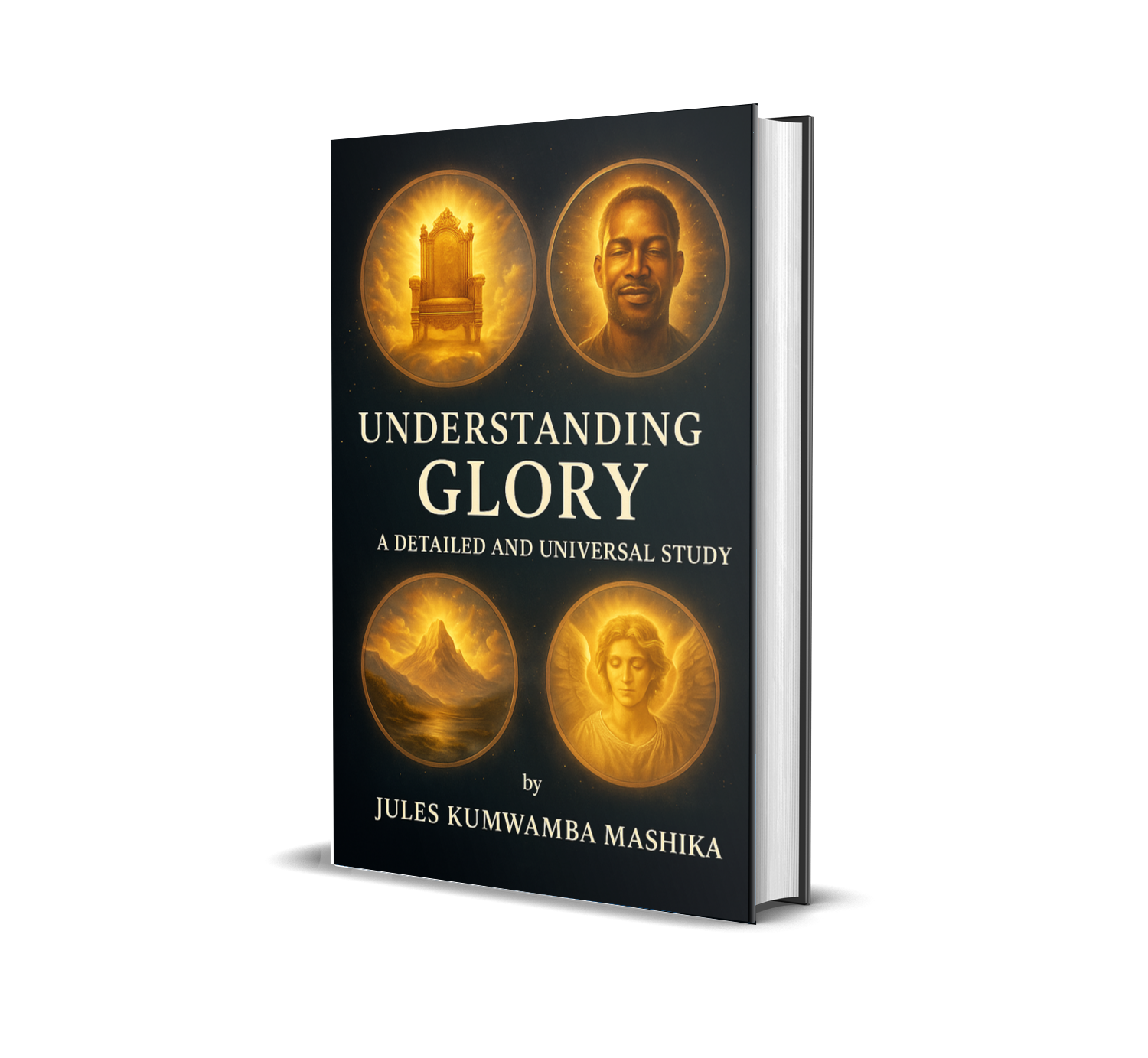
Glory is a golden thread that runs through Scripture, history, philosophy, and daily life. It is a divine attribute, a human aspiration, a demonic trap, and an eternal hope. To understand it is to know God better, to understand man more deeply, and to live more wisely.
This book invites every reader—believer or not—to explore this vast field, to compare glories, to discern their value, and to choose the path that leads to true light.





Avis
Il n’y a pas encore d’avis.